before the Christmas pageant, during the narrator's childhood
The Toolhouse Fire
The Herdman children set fire to Fred Shoemaker’s toolhouse with a stolen [Young Einstein chemistry set](entity:object-recall-object-young-einstein-chemist-2c53cf4a9bde), lighter fluid, and a collection of mixed powders. The building burned to the ground, and the family stayed at the scene long enough to eat most of the doughnuts intended for the volunteer firefighters.
The fire chief warned the watching children about matches and gasoline, but the Herdmans took away a different lesson: a fire brought free doughnuts. The neighbors considered the loss a blessing because the dilapidated toolhouse had long been an eyesore and a possible source of rats.
during the Herdmans’ years at Woodrow Wilson School
Claude’s Classroom Cat
[Claude Herdman](entity:character-recall-character-claude-herdman-6483ff3df8fc) brought the family’s one-eyed, bad-tempered cat to Show-and-Tell after keeping it hungry for two days. The cat sprang from its box, scratched the blackboard and children, and tore through the classroom while the teacher tried to catch it under a coat.
In the chaos, the teacher knocked over classroom displays and smashed an aquarium; the cat ate goldfish and a classmate’s pet mice. Claude explained that he had obeyed the instruction to leave the room, and the school later banned live animals from Show-and-Tell.
through the school years before the pageant
The Herdmans Advance
The Herdman children moved from grade to grade through [Woodrow Wilson School](entity:location-recall-location-woodrow-wilson-schoo-e1cc64d0cc22), overwhelming one teacher after another. Although they lacked basic skills and struggled to get along with anyone, teachers passed them rather than risk having two Herdmans in the same class at once.
The narrator stayed in [Imogene Herdman](entity:character-recall-character-imogene-herdman-219d19f5652c)’s grade and learned that being ordinary, keeping quiet, and avoiding attention offered the best chance of escaping her notice. The family’s reputation shaped daily life at school, where children expected trouble from them and organized themselves around avoiding it.
during the narrator’s school years
Imogene Learns Everyone’s Weight
Imogene found ways to linger in the health room while classmates were weighed and measured, once pretending that she might have caught an illness from Ollie. When the nurse went to check on him, Imogene copied the confidential weight records.
She used the information to embarrass and threaten other children. She warned Albert Pelfrey that he was getting heavier and would be sent to fat camp, and she blackmailed classmates for possessions, including a charm bracelet and a pocketbook. The school’s promise of privacy did little to stop her from turning secrets into leverage.
during the narrator’s school years
Imogene’s Cruel Secrets
Imogene discovered that [Alice Wendleken](entity:character-recall-character-alice-wendleken-9c3d8871b906) had once had head lice and hit her while calling out “Cooties,” even after Alice insisted the infestation was gone. The principal sent Alice to the health room to be checked, but classmates continued using the nickname for the rest of the year.
Imogene also invented secrets when she could not uncover real ones, leaving other children anxious about what she might know. Her bullying established the fearful imbalance between her and Alice, who was neat, cautious, and increasingly attentive to the Herdmans’ misbehavior.
before the pageant
The Herdmans’ Unsupervised Home
The Herdmans lived in a garage-side home at the bottom of [Sproul Hill](entity:location-recall-location-sproul-hill-d5129806f2a7), with rocks instead of grass, poison ivy instead of shrubs, and a dangerous-looking cat in the yard. Their father had disappeared years earlier, and their mother worked double shifts at a shoe factory.
A social-service worker tried to arrange support that might let their mother work less, but she preferred the factory to staying home with the children. The older Herdmans raised the younger ones, passing along what they knew; in the narrator’s view, the youngest, Gladys, became the meanest of them all.
two weeks before Thanksgiving
Armstrong’s Pageant Handoff
[Helen Armstrong](entity:character-recall-character-helen-armstrong-e1e34d76b0eb), who managed the [Christmas](entity:time-recall-time-christmas-a573265d0167) pageant along with several other church activities, fell and broke her leg. Even from her hospital bed, she continued giving instructions, but the pageant had to be handed to the narrator’s mother.
The narrator’s mother had expected only to make her children participate and persuade her husband to attend. Now she was responsible for a familiar production with fixed costumes, casting traditions, and little room for surprise. The change placed her in charge just as the church’s usual arrangements began to unravel.
before the Herdmans arrive at Sunday school
A Familiar Pageant Tradition
The pageant had long followed a settled pattern: young children played angels, older children shepherds, and the larger boys the Wise Men. [Alice Wendleken](entity:character-recall-character-alice-wendleken-9c3d8871b906) usually played Mary, while the minister’s son was routinely assigned Joseph; the remaining children formed a height-ordered choir that struggled to sing in tune.
The narrator’s father disliked attending and claimed he had seen the pageant already. His wife usually persuaded him by pointing out that the children’s costumes changed, including the year their son [Charlie](entity:character-recall-character-14be8315e7d3) wore his father’s bathrobe as a shepherd. For the family, even attendance had become part of the annual routine.
before the pageant casting
Charlie’s Unwelcome Honesty
During a Sunday-school presentation, the teacher asked the youngest children what they liked best about their classes. One child after another offered a cheerful answer about Bible stories, songs, or friends, until [Charlie](entity:character-recall-character-14be8315e7d3) said that what he liked best was that the Herdmans were not there.
The congregation remembered his blunt answer more than the other children’s remarks. Charlie explained that he had chosen the thing he genuinely liked best, and the narrator’s mother acknowledged that he had reason to be relieved: he had spent much of the previous school year bruised from sitting beside Leroy.
the Sunday before the pageant casting
Charlie’s Dessert Bluff
After Leroy repeatedly stole dessert from [Charlie](entity:character-recall-character-14be8315e7d3)’s lunch, Charlie claimed he could get all the treats he wanted in [Sunday school](entity:organization-recall-organization-11b500afd56b). He invented a lavish menu of cakes, candy, ice cream, doughnuts, and popcorn balls, although the church offered refreshments only on a few special occasions.
Leroy asked who provided the food, and Charlie named the minister. The claim made the Herdmans curious enough to attend the next Sunday, setting in motion the church’s first encounter with the whole family.
the following Sunday
The Herdmans’ First Visit
The Herdmans slouched into [Sunday school](entity:organization-recall-organization-11b500afd56b) looking for the promised food. The superintendent directed them toward the kitchen, where the church had gathered canned goods for the Orphans Home; the Herdmans mistook the donations for evidence that [Charlie](entity:character-recall-character-14be8315e7d3)’s story might be true.
They stayed through the service without singing or praying, and Imogene slipped coins from the collection basket. Before the morning ended, they also heard that the church would soon choose the principal roles for its [Christmas](entity:time-recall-time-christmas-a573265d0167) pageant, giving Imogene a new reason to pay attention.
after the first Sunday-school service
Imogene Asks About the Pageant
When the narrator mentioned that the pageant was a play, Imogene asked what it was about. The narrator answered that it was about Jesus, and Imogene muttered that everything at church seemed to be about him.
The narrator assumed that Imogene was uninterested. That judgment proved wrong: the Herdman children had come for food, but Imogene’s questions had opened the door to a story she did not know and would soon take seriously.
the Sunday after the Herdmans’ first visit
The Casting Meeting
With the children gathered after church, the narrator’s mother explained rehearsal times and the traditional roles. She asked for volunteers to play Mary and Joseph, expecting Alice to take Mary as usual and the minister’s son to remain Joseph.
Instead, Imogene raised her hand and announced that she wanted to be Mary; Ralph wanted to be Joseph. Alice declined to volunteer, and nobody else stepped forward for Joseph. Leroy, Claude, and Ollie claimed the Wise Men, leaving Gladys as the likely Angel of the Lord.
immediately after the casting meeting
Alice’s Threatened Role
The narrator discovered why Alice had kept quiet: Imogene had warned her not to volunteer for Mary. When Alice insisted she was always Mary in the pageant, Imogene threatened to push a pussy-willow branch into her ear so deeply that it would take root and grow there.
The threat sounded grotesque, but the Herdmans had once caused a real medical emergency by putting a pussy-willow sprig in Ollie’s ear. Alice believed Imogene would do what she said, and her fear helped explain why the familiar casting tradition had given way to the Herdmans.
the days after the casting meeting
The Church Objects
News that Imogene would play Mary brought complaints from Alice’s mother and other church members. Some proposed putting the Herdmans in charge of handing out programs, though the pageant did not even use programs; a neighbor warned the narrator’s mother that the family’s noise and cat would make the production a disaster.
[Helen Armstrong](entity:character-recall-character-helen-armstrong-e1e34d76b0eb), hearing what had happened from her hospital bed, said she felt responsible for not being well enough to supervise. Her remarks angered the narrator’s mother, who had been left with the work and now felt her authority questioned as well.
before the first rehearsal
The Mother’s Resolve
The narrator’s mother decided to make the pageant the best the church had ever seen, even with the Herdmans in the main roles. She insisted they had raised their hands when no one else had, and that their participation would stand.
[Reverend Hopkins](entity:character-recall-character-reverend-hopkins-57205d786562) ended the growing objections by reminding the congregation that Jesus had welcomed children without exception. His appeal to the principle of [“Suffer the little children to come unto me”](entity:expression-recall-expression-suffer-the-little-a245f86e4461) quieted the complaints and secured the Herdmans’ place in the production.
the first Wednesday rehearsal
The First Rehearsal
The Herdmans arrived late, and Leroy knuckled [Charlie](entity:character-recall-character-14be8315e7d3) behind the ear as they entered. The narrator’s mother chose to ignore everything that did not draw blood and welcomed the family, while the other children watched nervously for the trouble everyone expected.
The rehearsal quickly stalled as the Herdmans asked basic questions about shepherds, inns, and the people in the story. Their ignorance was not feigned: they had never learned the [Christmas](entity:time-recall-time-christmas-a573265d0167) narrative, and the ordinary pageant script made little sense to them without explanation.
during the first rehearsal
The Christmas Story Explained
The narrator’s mother read the [Christmas](entity:time-recall-time-christmas-a573265d0167) story from the Bible, and the Herdmans interrupted whenever its language or events confused them. Ralph reacted loudly to the phrase “great with child,” while Imogene was outraged that a pregnant Mary had found no room at the inn, not even for Jesus.
Their questions made the familiar story feel newly urgent. Imogene wanted to know why Mary had not told people who the baby was and why Joseph had not demanded better treatment, while Leroy tried to understand why a baby would be placed in an animal’s feeding trough.
during the first rehearsal’s Bible reading
The Manger and the Swaddling
When the narrator’s mother explained the manger and swaddling clothes, the Herdmans compared the story to their own rough experience of family life. Imogene recalled that Gladys had been placed in a bureau drawer, and Ralph added that Ollie had refused to give up the bed.
Imogene could not accept the image of a newborn tied tightly and laid in a feedbox. She asked where Child Welfare had been, bringing the story’s hardship into sharper focus and exposing how readily the Herdmans recognized neglect and insecurity.
during the first rehearsal’s Bible reading
Gladys’s Comic Angel
When the reading reached the Angel of the Lord appearing to the shepherds, Gladys shouted “Shazam!” and acted out a comic-book hero bursting into the night. Her reference was to a superhero story her mother did not recognize.
The moment showed how the Herdmans interpreted the Bible through whatever stories they knew. Gladys nevertheless understood the scene’s dramatic shape: an angel arrives suddenly in darkness with news powerful enough to startle everyone.
later in the first rehearsal
The Wise Men’s Gifts
The Herdmans learned that the Wise Men were kings who brought gold, frankincense, and myrrh. Imogene objected that fragrant oils were poor gifts for a baby, comparing them unfavorably with the presents the family sometimes received at the firemen’s party.
The story then introduced Herod, who had sent the Wise Men to find Jesus and planned to have the child killed. The Herdmans became intensely interested in the cruel king and could not understand why the pageant did not show him being punished.
at the end of the first rehearsal
The Herod Dispute
The Herdmans left arguing over whether Joseph should set fire to the inn or drive its keeper away. Their outrage centered on Mary and the baby being forced into a stable, and on Herod’s threat to murder Jesus.
At home, the narrator’s father agreed that the treatment of Mary was disgraceful. The narrator’s mother saw something revealing in the Herdmans’ response: although they were ready to imagine violence, they had identified Herod—not Mary or Joseph—as the villain.
the day after the first rehearsal
Imogene Seeks the Library
Imogene asked the narrator how someone could get a library card and whether the borrower had to sign their own name. The narrator assumed she wanted a forbidden book, but the Herdmans instead went to the library as a group and requested cards.
Imogene said they wanted to read about Jesus, then Ralph clarified that they were looking for the king who had tried to get Jesus: Herod. The family’s curiosity had moved beyond rehearsal, and the librarian was astonished to see Imogene seeking books about the Bible story.
between the first and second rehearsals
The Herdmans Investigate Herod
After researching Herod, the Herdmans returned to rehearsal angry that he had killed people, including members of his own family, and had nevertheless died peacefully in old age. They wanted the pageant rewritten so that Herod would be hanged.
Their indignation unsettled the usual boundaries between scripture and stage convention. The Herdmans would not accept a villain who escaped a visible punishment, yet they kept attending rehearsals and followed the parts assigned to them.
during rehearsals
Alice’s List of Offenses
Alice began keeping a written record of the Herdmans’ behavior, noting that Gladys drank what Alice called communion wine, that the children took crayons and pennies, and that Imogene smoked in the girls’ room. The narrator corrected her that the church used grape juice, but Alice continued documenting the incidents.
Her list reflected her hope that the family would eventually commit an offense serious enough to be expelled. It also kept alive her rivalry with Imogene, even as the rehearsals began to reveal more about the children than Alice wanted to recognize.
during rehearsals
Imogene’s Unconventional Mary
Imogene played Mary as a loud, protective mother rather than the quiet, dreamy figure the congregation expected. She ordered Ralph away from the baby and pushed the Wise Men back, reading their approach through the suspicion that had shaped her own life.
The narrator’s mother repeatedly explained that the Wise Men meant to honor Jesus, but the Herdmans could imagine them betraying the child to Herod. Their rough interpretation forced the other children to consider how vulnerable the baby would have been and how much depended on the adults around him.
during the rehearsal period
A Baby for the Pageant
The pageant had no baby to play Jesus because parents withdrew their offers after learning that Imogene would be Mary. The narrator’s mother searched for a substitute, including asking a foster parent about a three-month-old baby, but that child was adopted before [Christmas](entity:time-recall-time-christmas-a573265d0167).
Imogene offered to steal a baby from a carriage outside the supermarket, treating the idea as practical rather than alarming. The narrator’s mother rejected the plan and settled on using a doll, which Imogene approved of because a doll could not bite.
at the last rehearsal before the pageant
The Naming Argument
During the dress rehearsal, Imogene insisted that she should tell the audience the baby’s name. The narrator’s mother reminded her that Mary had not chosen the name; Ralph claimed he had named the baby, and Imogene said she would have called him Bill.
Alice volunteered a formal biblical description of the child, prompting Imogene to joke that a boy with such a long name would never get through first grade. The exchange exposed the gap between Alice’s polished reverence and Imogene’s practical, irreverent questions, while the narrator’s mother struggled to maintain the pageant’s conventions.
the night before the church potluck
The Dress Rehearsal Unravels
The final rehearsal faltered repeatedly: angels forgot their wings, shepherds feared Gladys, and the choir sang two different carols at once. Imogene could not find the baby doll, substituted a large flower urn, and dropped it on Ralph’s foot before recovering the doll and naming it Jesus.
The narrator’s mother reminded Imogene that the pageant’s Mary was not meant to speak. The production relied on silence from Mary, Joseph, and the Wise Men, leaving them to form a picture for the congregation; Imogene’s instincts kept pressing against that carefully controlled convention.
during the final rehearsal
Imogene Keeps Her Earrings
Imogene refused to remove her large gold earrings for the performance, fearing that her pierced ears would close. She revealed that Gladys had pierced them, leaving the narrator imagining the injury that might have resulted.
The narrator’s mother negotiated for smaller jewelry rather than forcing the issue. Even amid the comedy, Imogene’s determination to protect the new piercings underscored the improvised, unsupervised circumstances of the Herdman children’s lives.
during the break at the final rehearsal
Smoke in the Church
A five-minute break stretched into fifteen minutes, and Imogene smoked cigars in a restroom. When Mrs. McCarthy smelled smoke, she assumed there was a fire and called the fire department while the group was rehearsing a carol.
The firefighters evacuated the church and searched for flames as children and neighbors crowded outside. The actual smoke came from Imogene’s cigar, but the commotion spread into the kitchen, where the potluck committee’s applesauce cake burned while everyone was away.
the night of the smoke scare
The Churchwide Uproar
The ruined cake and fire-department response left the potluck organizers angry and confused. [Mrs. Wendleken](entity:character-recall-character-mrs-wendleken-7ac904daa8a6) circulated Alice’s notes, and rumors grew that the Herdmans had set fires, thrown flowerpots, and talked about sex and underwear.
[Reverend Hopkins](entity:character-recall-character-reverend-hopkins-57205d786562) visited the narrator’s mother to ask whether the pageant should be canceled. She refused, insisting it would be the best pageant the church had ever had, though the narrator recognized that the claim was more determination than confidence. The commotion guaranteed that people would attend to see what the Herdmans did.
the night of the Christmas pageant
The Family Brings the Ham
With no supper prepared, the narrator’s family planned to eat hamburgers afterward. The narrator’s mother worried that the pageant might collapse into a fight or that Mary might run away with the baby, but the evening began with the familiar disorder of restless children, crooked wings, and an erratic spotlight.
When the Wise Men entered, Leroy carried a heavy ham wrapped in the ribbon from the family’s [Christmas](entity:time-recall-time-christmas-a573265d0167) food basket. The gift was not stolen: it belonged to the Herdmans, and they had chosen to give it away. Its unexpected generosity changed the scene and challenged the audience’s assumptions about them.
early in the Christmas pageant performance
The Holy Family Appears
Ralph and Imogene did not shove one another as they entered. In the candlelit church they paused uncertainly, appearing to the narrator like refugees arriving in a strange place, rather than the tidy figures the pageant usually presented.
Imogene carried the doll over her shoulder and burped it before placing it in the manger. Alice whispered that it was improper to burp Jesus, but the narrator recognized that the baby could have been fussy or hungry like any other newborn. The ordinary physical detail made the story’s human reality newly vivid.
during the Christmas pageant performance
Gladys Announces the Birth
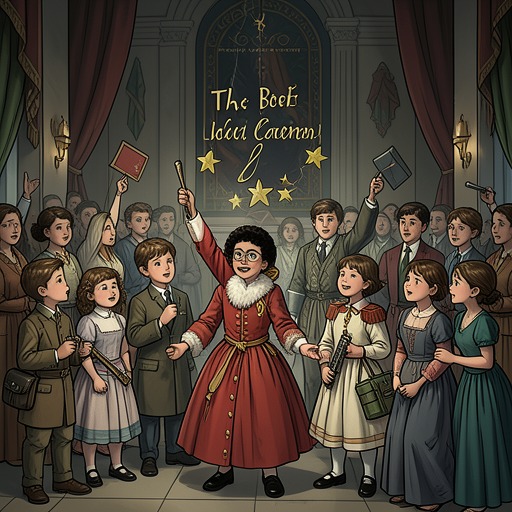
Gladys pushed through the pageant participants and delivered her one line with unmistakable force: “Unto you a child is born.” The shepherds trembled, partly because they feared Gladys, but her excitement made the announcement sound like genuinely wonderful news.
The line broke through the production’s usual stiffness. Gladys treated the birth as urgent and astonishing, turning a memorized cue into a proclamation that seemed directed at everyone in the church.
later in the Christmas pageant performance
The Wise Men Offer Ham
The Wise Men marched up the aisle, with Leroy struggling under the weight of the ham and his brothers carrying no traditional gifts. Alice suspected they had brought something terrible, but the narrator recognized the family’s food-basket ham and understood that they were giving away something of their own.
After placing the ham before the manger, the Herdmans sat down instead of conferring and leaving by another door. The narrator found the choice more believable than the conventional exit: travelers who had come a long way might rest beside the child they had come to honor.
near the end of the Christmas pageant performance
Imogene Weeps at Christmas
As the congregation sang “Silent Night,” the narrator noticed Imogene crying. She sat in her crooked veil with tears running down her face, making no attempt to hide them.
Her emotion was the unexpected event everyone had been waiting for, but it did not feel like a prank or a performance. The narrator sensed that the story of the vulnerable mother and child, and the wonder of Jesus’ birth, had reached Imogene in a way the familiar pageant had never reached the other children.
immediately after the performance
A Pageant Transformed
The congregation called it the best [Christmas](entity:time-recall-time-christmas-a573265d0167) pageant the church had ever had, even though people struggled to explain what made it different. [Mrs. Wendleken](entity:character-recall-character-mrs-wendleken-7ac904daa8a6) remarked on Imogene’s swollen eye, which came from walking into a cabinet while dazed rather than from a fight.
The narrator understood that the Herdmans had made the familiar story less mysterious by making its people seem real: a mother and father in trouble, a baby without a proper bed, and unexpected visitors bringing help. Imogene’s response had opened a new way of seeing Christmas for the narrator as well.
after the pageant, before leaving the church
The Picture of Mary
The narrator’s mother had the ham the Herdmans had given, since they would not take it back. They also declined the candy and small Testaments offered to the cast, but Imogene asked for the Bible-story pictures and chose the image of Mary.
The narrator wondered whether Imogene liked the picture because it showed a pure, idealized Mary unlike the busy, loud mother she had portrayed. Yet the narrator’s own understanding had changed: Mary would always resemble Imogene, wary and bewildered but ready to protect her child, while the Wise Men would remain the brothers carrying a ham.
the night the pageant ends
The Final Christmas Benediction
Outside the church, the snow crunched underfoot and bright stars filled the clear sky. The narrator thought of Gladys, in dirty sneakers beneath her robe, calling out to everyone that a child had been born for them.
The family that had entered church for refreshments had left its mark on the congregation and on the narrator’s understanding of the story. Their blunt questions and unpolished performance had made the [Christmas](entity:time-recall-time-christmas-a573265d0167) message feel immediate, human, and welcoming.